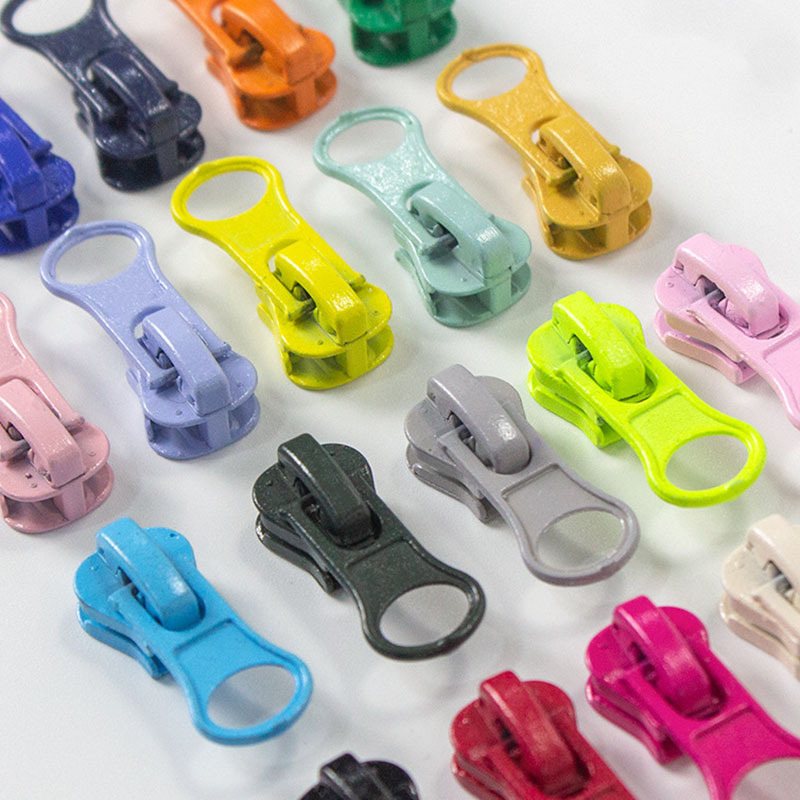
The slider is the moving component that opens and closes a zipper chain. Its locking mechanism, operating direction, puller and compatibility with the chain all affect how the finished product performs.
Why the slider type matters
A slider that looks correct may still be unsuitable for the application. The chain type and size must match the slider body, while the locking behavior should match how the product is worn, opened or handled. A jacket, handbag, tent and cushion can therefore require different slider decisions even when the nominal zipper size is similar.
Before sampling, buyers should confirm the zipper material, size, opening structure, operating direction, locking requirement and puller design. These details reduce the risk of poor movement, unintended opening or an uncomfortable user experience.
Auto-lock zipper sliders
An auto-lock slider contains a locking mechanism that engages the zipper chain when the puller is released. Lifting the puller disengages the lock so the slider can move. This helps the zipper remain in position during normal use.
Auto-lock sliders are commonly considered for jackets, trousers, footwear, bags and other products where unintended slider movement would be inconvenient. The final choice still depends on the chain construction, installation direction and performance requirement.
Non-lock zipper sliders
A non-lock slider moves without a locking pin holding it to the chain. It is useful where easy, frequent movement is more important than holding the slider at a fixed point. Common applications can include luggage, pockets, covers and products where tension or another construction feature keeps the zipper closed.
Because a non-lock slider can move more freely, buyers should test it in the actual product orientation. The same slider may behave differently on a horizontal opening, a curved bag panel or a vertical garment closure.
Reversible and reverse-use sliders
Reversible operation allows the zipper to be handled from both sides of the finished product. This can be achieved with a reversible pull arrangement or a slider designed for the intended two-sided use. Applications include reversible garments, sleeping bags, tents and access panels.
“Reverse coil zipper” is a different term: it normally describes a nylon coil zipper installed with the coil facing inward for a cleaner exterior. A reverse-coil zipper does not automatically mean the slider can be operated from both sides. The chain orientation and slider operation should be confirmed separately.
Double sliders and two-way openings
A zipper can use two sliders for several purposes. On luggage or bags, two sliders may meet at the center. On long coats and jackets, a two-way open-end zipper can open from the bottom while remaining connected at the top. Tents and covers may use opposing sliders to create flexible access points.
The two sliders must be selected as a compatible pair and matched to the direction of the zipper chain. For open-end constructions, the box, pin, top stops and slider orientation also need to work as one system.
Puller shape, finish and branding
The puller affects grip, appearance and brand recognition. A small teardrop puller may suit a lightweight garment, while a larger ring or cord-compatible puller can be easier to operate with gloves. Metal finishes, painted colors, plastic components and soft-touch materials create different visual and tactile effects.
For a custom puller, confirm the overall dimensions, attachment point, logo direction, surface finish, color reference and expected use. A decorative shape still needs sufficient clearance to move without rubbing the fabric or interfering with the slider lock.
Compatibility comes before appearance
Slider selection starts with the zipper chain. Nylon coil, plastic molded and metal zippers use different slider structures. Size labels such as 3#, 5# or 8# are useful starting points, but they do not guarantee that any slider carrying the same number will fit every chain.
The supplier should match the slider to the actual chain specification and confirm movement on a finished sample. For products exposed to moisture, abrasion, salt or repeated outdoor use, material and finish requirements should also be discussed before production.
Information to send for sampling
- Zipper type: nylon coil, plastic molded, metal or water-resistant
- Zipper size and chain reference
- Closed-end, open-end or two-way construction
- Auto-lock, non-lock or reversible operating requirement
- Single or double-slider arrangement
- Puller reference, dimensions, logo and finish
- Application, zipper length, color and estimated quantity
A physical sample or clear close-up photo is often the fastest way to confirm compatibility when replacing an existing slider.
Quick selection checklist
Choose the chain first, then confirm slider compatibility and locking behavior. Review the puller only after the functional structure is correct. Finally, test the assembled zipper in the intended opening direction and approve a sample before bulk production.